The Final Dawn
The mist clung to the valley floor like a ghost refusing to leave the earth. On the ridge above, mounted figures stood silhouetted against a bleeding sunrise, their lacquered armor swallowing the pale light. They represented the last gasp of two great samurai clans, forces destined to erase each other before noon. For a generation, these houses had danced a serpentine path of alliance and bitter betrayal. Today, under the watching eyes of silent gods, the poetry of feudal Japan would give way to absolute annihilation.
At the center of the line, a man named Kenji adjusted the grip on his longbow, his knuckles pale beneath the leather gloves. He was not a high lord, merely a rider of the third rank bound by the rigid hierarchy of the bushido code. His family had served the Takeda for eighty years in a chain of unbroken honor. He did not fight for land or for the abstract politics of samurai clans, but for the promise he had whispered to his sleeping son three nights prior. The weight of that promise felt heavier than the steel plates on his chest.
The horn sounded—a low, mournful wail that cut through the marrow of every man on the field. It was the voice of feudal Japan screaming its own requiem across the mountains. There was no charge, only the slow, deliberate walk of horses descending into the vortex of spears. Kenji had studied the bushido code since boyhood, memorizing texts that glorified this exact moment of convergence. The reality, he found, was less about glory and more about the terrible silence between heartbeats. The legends of legendary warriors always omitted how cold the morning wind actually felt.
Within minutes, the geometric formations shattered into islands of individual duels. He watched a retainer from his own unit—a man who made origami for the younger boys—get pulled from his saddle by a hooked polearm. Kenji loosed three arrows in rapid succession, each finding the gaps in strange armor, each killing a stranger who shared his love for this violent land. This was the paradox of honor: a sacred protection of one's own identity through the obliteration of another. The samurai clans that survived this age would be those who learned to forget the faces of the slain.
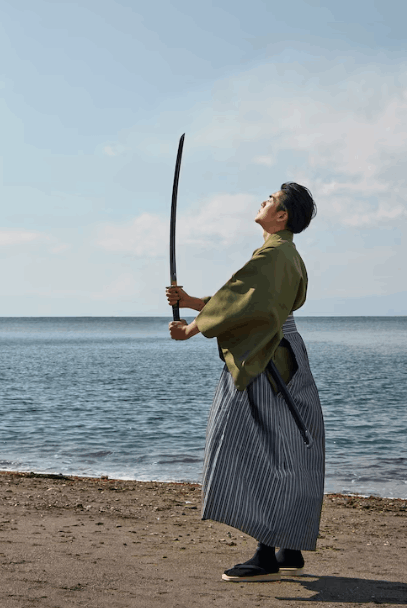
By mid-morning, his horse was dead and the shaft of his bow had been splintered by a glancing sword strike. He drew the katana, and the world narrowed to a tunnel of instinctual killing. The blade was not just a weapon; it was the soul of his lineage, forged by men who believed the bushido code was a physical manifestation of the universe. Sweat and blood made the wrapping slick. He remembered his father's strict instruction: a legendary warrior does not feel the weight of the sword; he becomes its extension. Kenji was no longer a man, but a storm.
As the sun reached its zenith, the battle was lost. His lord had fallen into the mud, and the remaining samurai clans on his side were scattering into the treeline. Surrounded and bleeding from a deep wound in his thigh, Kenji prepared to end his own saga here. The final verse of the bushido code required a death poem as fierce as the life that preceded it. He pressed the tip of his dagger against his abdomen, ready to perform the ultimate act of honor that defined feudal Japan. The physical agony was nothing compared to the separation from his memory.
But the blade did not move. A rival general rode forward, dismounted, and with a gloved hand pushed the dagger down. "Go home," the general commanded in a dialect Kenji barely understood. "The age of legendary warriors dying in empty fields is over. The sick child you whispered to—I see him in your eyes." The general walked away, instructing his men that this one was to be left alone. Kenji limped from the valley into the silence of the pines, a living monument to a mercy that existed outside the rigid text. He was an echo of honor walking wounded, a shadow of the warrior he had planned to become, yet somehow more complete in his defeat than he ever was in his attack. The bushido code had taught him how to die, but this stranger had forced him to learn how to live.