Ink and Iron
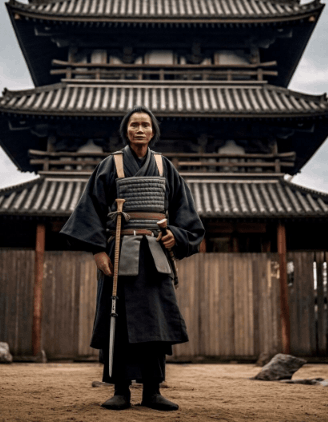
The administration of war in feudal Japan required a staggering amount of ink before a single drop of blood was shed. Behind every charge of the samurai clans stood a silent army of scribes and strategists, their calligraphy brushes wet with the terrifying logistics of violence. These were the balding, aged men of the bushido code, warriors who had traded the katana for the brush but retained the ferocity of honor within the confines of a scroll. A treatise on supply lines, inked flawlessly on rice paper, could starve an enemy fortress before winter even arrived. The legendary warriors who got the statues were merely the tip of a literary iceberg.
The war room of a Daimyo was a quiet place, smelling of lamp oil and grinding stone. Maps sprawled across the floor depicted the patchwork of feudal Japan not in topographical color, but in the heraldry of hostile neighbors and fragile samurai clans. A misplaced brush stroke on a communiqué could shatter a century-old alliance, proving that the bushido code extended far beyond physical bravery into a realm of intellectual precision. Before a castle was stormed, the minds of these strategists had stormed it a hundred times on paper. This was the chess game that preceded the slaughter.
Chikamatsu, a retired fighter turned chief strategist, viewed the world through the lens of brush and ink. His body was ruined by old campaigns, but his mind was the sharpest weapon in his clan’s arsenal. In the intricate bureaucracy of feudal Japan, his mastery of the written word held more power over the neighboring samurai clans than a thousand mounted cavalry. He drafted the laws of supply, knowing that a hungry warrior violates the bushido code instantly. For him, honor was not a glorious charge but a perfectly balanced spreadsheet of grain and dried fish.
His greatest battle involved no troop movements. It was a contest of calligraphy with a rival strategist from across the border, a diplomatic duel where the pressure of the ink decided the fate of a disputed valley. The two masters, representing the pride of their samurai clans, sat in a neutral teahouse, the air thick with the silent tension that defines feudal Japan. They exchanged poems and written threats, each character a micro-aggression loaded with the bushido code's demand for absolute face. A single tremor in the hand signifying fear would mean a loss of negotiation power, and thus, eventual conquest.
As the night deepened, the exchange became a philosophical treatise on the nature of honor itself. Chikamatsu wrote of protecting the harvest, of the farmer’s hands being holier than the swordsman’s. His opponent, a classicist, retorted with rigid quotes from the bushido code, arguing that the economy existed only to serve the martial glory of the samurai clans. The paper became a battlefield where the ideals of feudal Japan clashed without the mess of blood. The future of legendary warriors hinged not on a castle wall, but on the elegance of a grammatical argument about the definition of duty.
By the third scroll, Chikamatsu created a subtle metaphor linking the flow of rivers to the flow of diplomacy, arguing that blocking water kills the land just as rigid pride kills a clan. The opposing strategist faltered, his wrist hesitating over the paper, a fatal breach of the mental timing that governed the bushido code. Recognizing the spiritual defeat, the rival bowed, ceding the valley not because his samurai clans lacked soldiers, but because his intellectual honor had been surpassed. The negotiation was a flawless victory, a testament to the mind over the blade in the shaping of feudal Japan.
Chikamatsu returned to a fortress that never fired an arrow, carrying scrolls that weighed more than armor. The young legendary warriors of the garrison looked at the old man with confusion, unable to comprehend a victory won without a visible scar. Yet the bushido code had always reserved its deepest respect for the man who neutralizes a sword before it leaves the scabbard. Late that night, Chikamatsu cleaned his brushes and watched the moon rise over the peaks of feudal Japan, knowing the highest form of honor is a peace preserved through ink, not a victory carved in iron.